An exceptional craft
In their workshop, Gem cutters handle traditional tools, such as the “étui mécanique”- a typical Jura invention – used all over the world today.
While using this French know-how, the gem cutters keep on improving the cutting, faceting as well as the tools and materials used. The gem cutters are aiming the perfect cut ; Piat has a strong commitment to work with the best tools and anticipate the most beautiful innovations in the art of cutting.
The art of Piat is to reveal and enhance the brightness and colour of a gem while minimizing the weight loss. The cutting style is chosen according to the overall characteristics: colour zoning, inclusions, fracture or cracks in the rough…
The gem cutter also has an excellent knowledge of gemstones, their crystallographic and chemical properties.
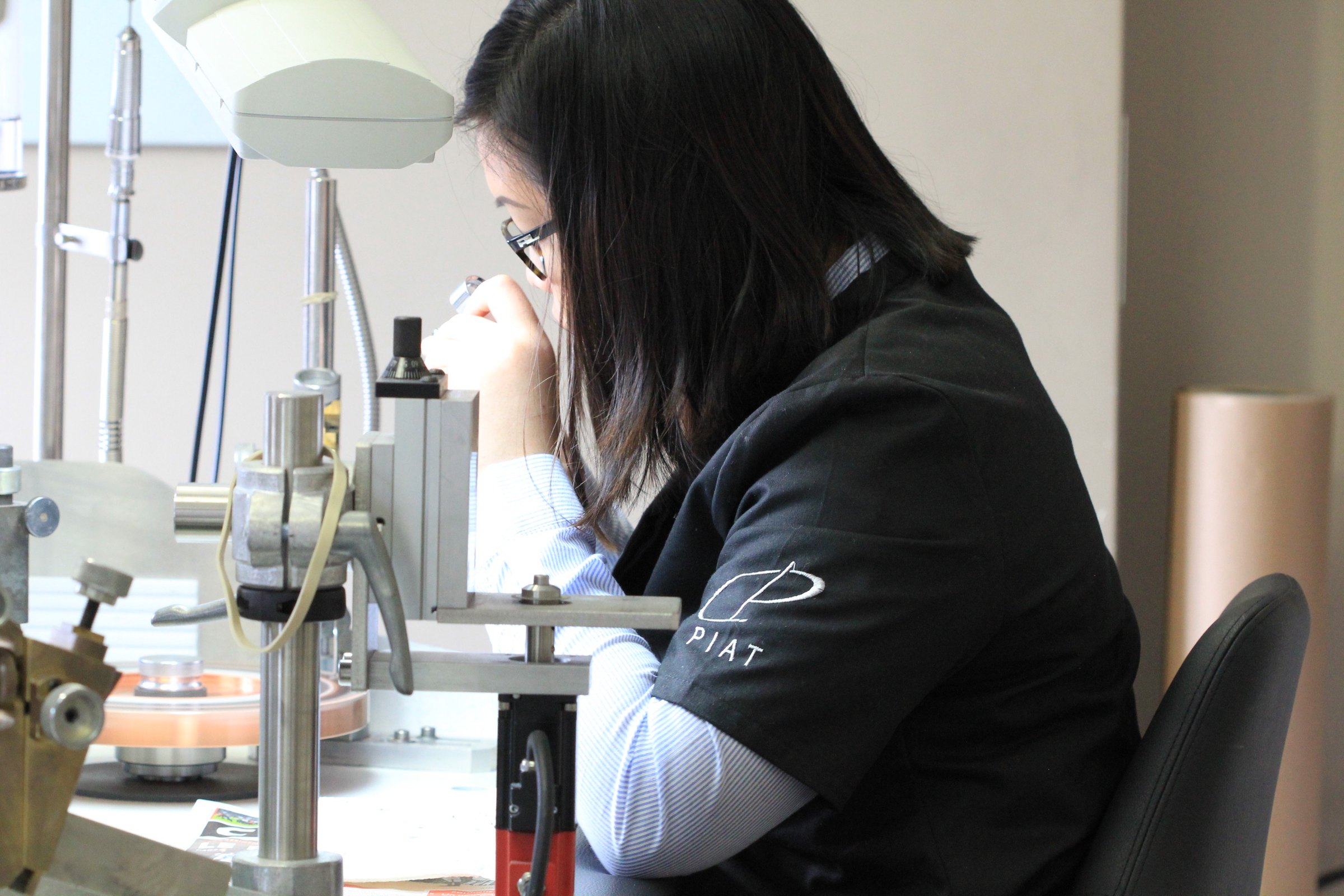
Working on rough gemstones
This is definitely the most challenging task for a gem cutter, as it requires a strong knowledge on gemstones.
The biggest concern during the cut is to produce the finest gemstones with a maximum brightness, intensity and colour while minimizing weight loss. Analyzing the rough is therefore extremely important.
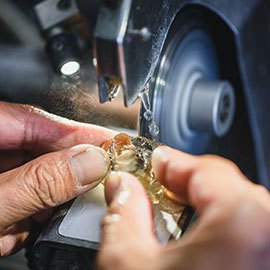
Step 1
Sawing
Sawing can extract a portion of an uncut stone or get rid of the damaged areas, areas that are too flat, or where the colour is not uniform. These parts will be used to create new gems of a different quality. This step saves time during roughing. However, it is not systematic: it depends on the purity of the uncut stone and its shape.
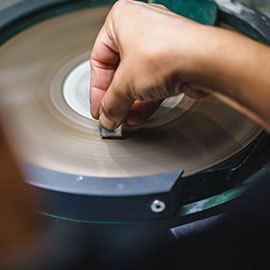
Step 2
The outline
The lapidary's experience is decisive when working on the uncut stone because he will begin to create the volume of the stone while maintaining its weight. If the stone is large, he will work directly on the grindstone but puts small stones on a rod.
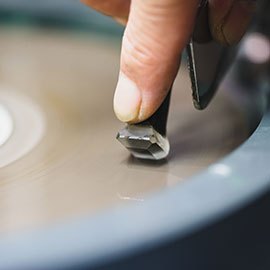
Step 3
Faceting
Designed to enhance the colour and the optical qualities of the stone, faceting requires precision and skill. It is at this stage that it will be possible to hide some imperfections with the dimensions of the facets. By constantly innovating, Piat has created its own faceting technique, which can be used for many types of stones.
Step 4
Polishing
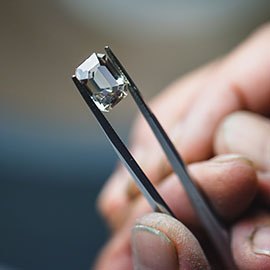
Final step of the cutting: the polishing must be absolutely perfect so that the stone reflects light perfectly and reveals all its beauty through each of its facets. Depending on the hardness of the stone and the material, a different wheel is used according to these characteristics. This work requires a lot of time and application. Polishing can also be used to beautify a ground stone - the size will be preserved and a minimal amount of weight lost.
Setting on the piece
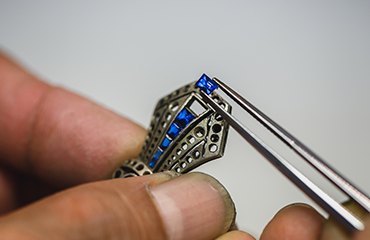
This extremely precise work involves cutting one or several gemstones directly on a piece of jewellery.
The gems are then set on the jewellery piece. Piat offers its expertise regarding the choice of gemstones according to the colour and size of the piece. The Maison selects gems or adjusts coloured stones that have been sent to our workshops.
Working on centre stones
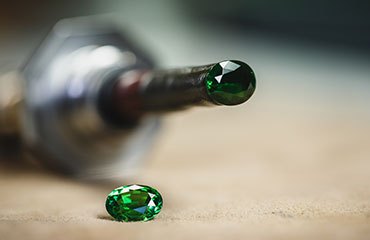
Working on centre stones involves bringing out the brightness and colour of the gem by shaping, cutting and/or polishing it.
Gem cutters can give a new shape to a stone, change the size and faceting. They pay special attention to the quality of polishing, which has a direct impact on the beauty of the stone. They strive to retain the maximum weight.
The gem trade: control and traceability
Piat is one of the last French Maison with an expertise of rough gems. The workshop in Bangkok allows the company to keep up to date with mines opening or closures, new stones availability as well as markets trends and supply.
With his expertise and extensive market knowledge over three generations, Piat provides exceptional natural gems to his customers and meets all specific requests.
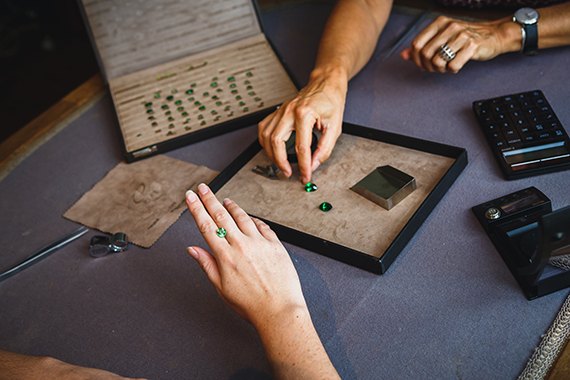
Emmanuel Piat also purchases rough stones directly from the production sites to meet demands for a particular shape and minimize weight loss during the adjustment work. Buying rough gems guarantees him the traceability and helps him control the presence of treatment in the gemstones.
The workshops
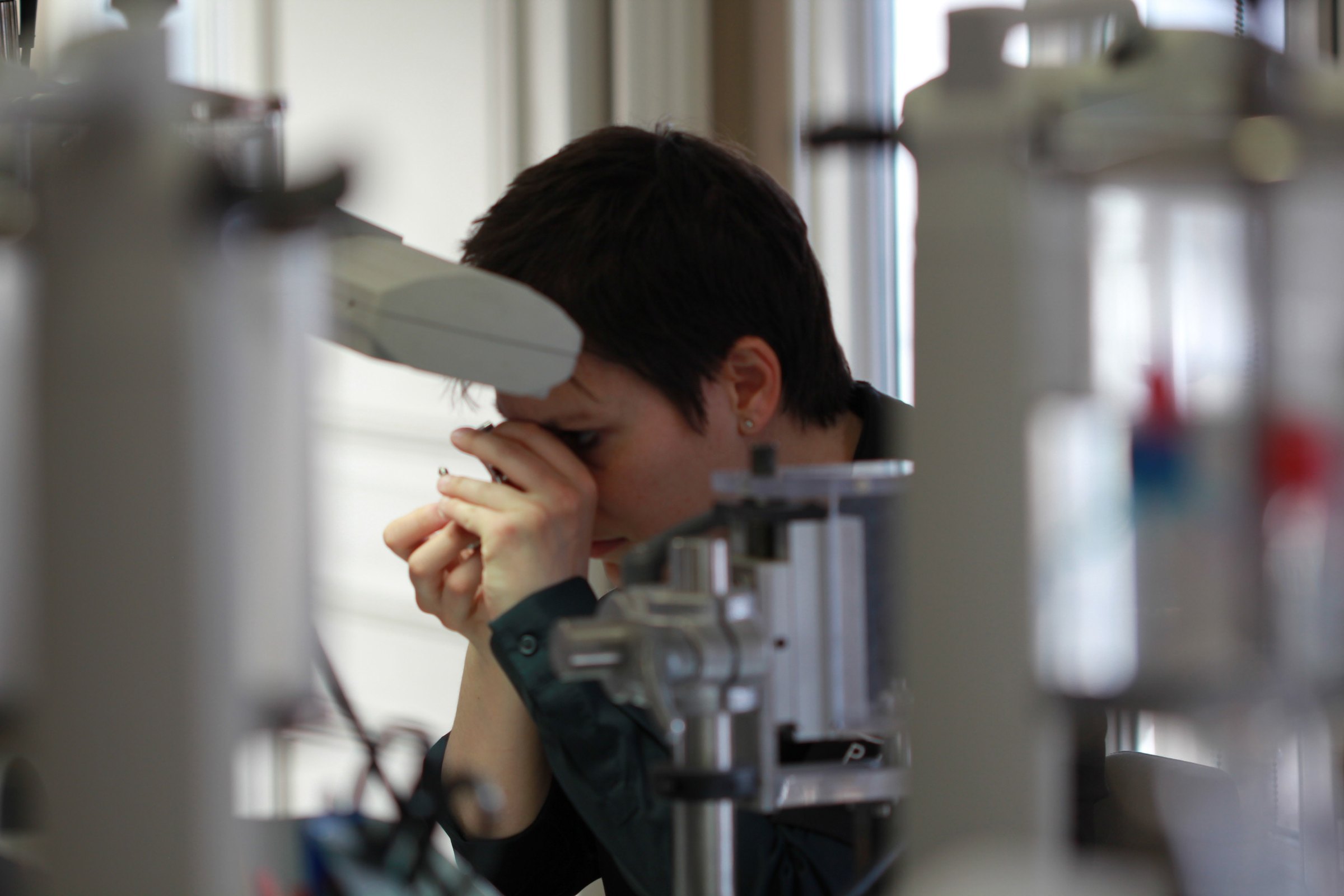
A lapidary workshop in Paris
The workshop was established in 2010 when the company moved to Rue de la Paix, near Place Vendôme, to be closer to its customers. The Maison strengthens its partnership with the jewellers. The workshop is specialized in cutting rough but also aims to enhance the gems natural beauty and set them in jewellery pieces.
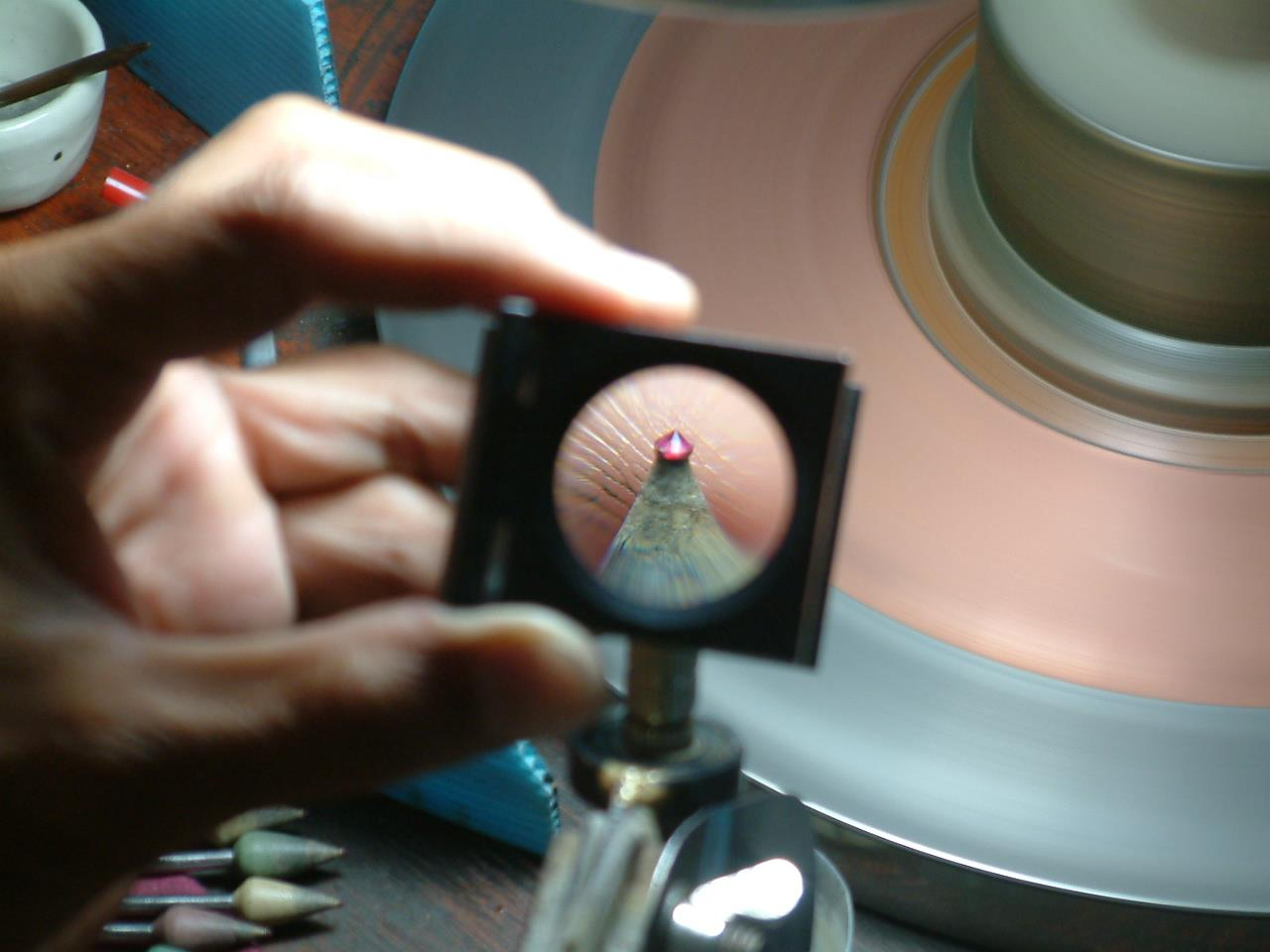
A lapidary workshop in Bangkok
Discover Piat ThailandPiat chose the world capital of gem cutting and trade to establish a workshop specialized in calibrated stones but also to complete its own collection of center stones.